
You step on a tile and hear a hollow, drum-like sound. The surface looks fine, but more often than not, the bond has failed underneath. Most people assume the only option is ripping up the floor, sourcing replacement tiles (that may no longer exist), and dealing with days of demolition dust throughout the house.
There’s a better way.
Epoxy injection tile repair is a non-invasive method that re-bonds loose and drummy tiles from beneath the surface, without removing a single tile. It’s faster, cleaner, and a fraction of the cost of full replacement.In this guide, we cover what epoxy injection tile repair actually involves, how the process works step by step, when it’s the right solution, and why it has become the preferred approach for fixing drummy tiles across Australia.
Key Takeaways
- Epoxy injection tile repair re-bonds loose or hollow tiles to the substrate without removing them.
- The process involves injecting a structural epoxy through small holes in the grout line to fill voids beneath the tile.
- It’s a faster, cleaner, and more cost-effective alternative to full tile replacement.
- This method is effective on most tile types, including ceramic, porcelain, and natural stone, whether installed on floors or walls.
- Epoxy injection is ideal for drummy tiles that are visually intact but no longer bonded to the surface beneath.
- It’s not suitable for cracked, broken, or structurally compromised tiles, or for areas with severe substrate damage.
- Assessment is recommended to determine whether injection repair is the right solution for your specific situation.
Why Do Tiles Become Loose?
Understanding the underlying causes of tile detachment is essential for assessing the extent of the issue and how to prevent the problem from recurring.
- Poor Initial Installation: This is the most common culprit. “Spot bonding” (When adhesive is applied unevenly, in insufficient quantities, or using the wrong product for the tile and substrate combination), is when the bond is compromised from day one. These are a frequent cause of voids beneath tiles that eventually lead to hollow, drummy sounds.
- Structural Movement: Buildings move. Concrete slabs settle, timber subfloors expand and contract, and foundations shift over time. Without properly installed expansion joints, tiles have no room to accommodate this natural movement. These movements place stress on the rigid bond between tile and substrate, and over time, that bond can fail.
- Moisture Damage: Water is one of the biggest threats to tile adhesion. Leaks, failed waterproofing, or even prolonged exposure to moisture through unsealed grout can weaken the adhesive layer beneath tiles. In wet areas like bathrooms and laundries, this is a particularly common issue.
- Thermal Expansion and Contraction: Tiles and substrates expand and contract at different rates when exposed to temperature changes. Areas that receive direct sunlight, homes with underfloor heating, or outdoor tiled spaces are especially vulnerable. Over time, these repeated cycles of expansion and contraction gradually break down the adhesive bond.
💡For a deeper look at what causes hollow tiles and how to identify them, see our full guide: What Are Drummy Tiles?
The Risks of Ignoring Loose Tiles
It’s tempting to put off tile repairs when the surface still looks intact. However, hollow or loose tiles rarely stay a cosmetic issue for long. Left unaddressed, the problem almost always gets worse, and more expensive to fix.
- Safety hazards are the most immediate concern. Loose tiles can shift underfoot, creating uneven surfaces that increase the risk of trips and falls. This is especially dangerous in wet areas like bathrooms and kitchens, and in homes with young children or elderly residents.
- Further tile damage is almost inevitable. A tile that’s lost its bond is no longer supported from beneath, which means it’s far more vulnerable to cracking under weight or impact. One cracked tile often leads to stress on neighbouring tiles, accelerating the spread of the problem.
- Water penetration becomes a serious risk when tiles lift or grout lines crack open. Moisture can seep beneath the tiled surface and damage the substrate, compromise waterproofing membranes, and create conditions for mould growth. In bathrooms and wet areas, this can lead to significant structural damage that’s far more costly to repair than the tiles themselves.
Early intervention saves money. Addressing drummy tiles before cracks, moisture damage, or widespread failure develops keeps repair costs low and your repair options open.

What Is Epoxy Injection Tile Repair?
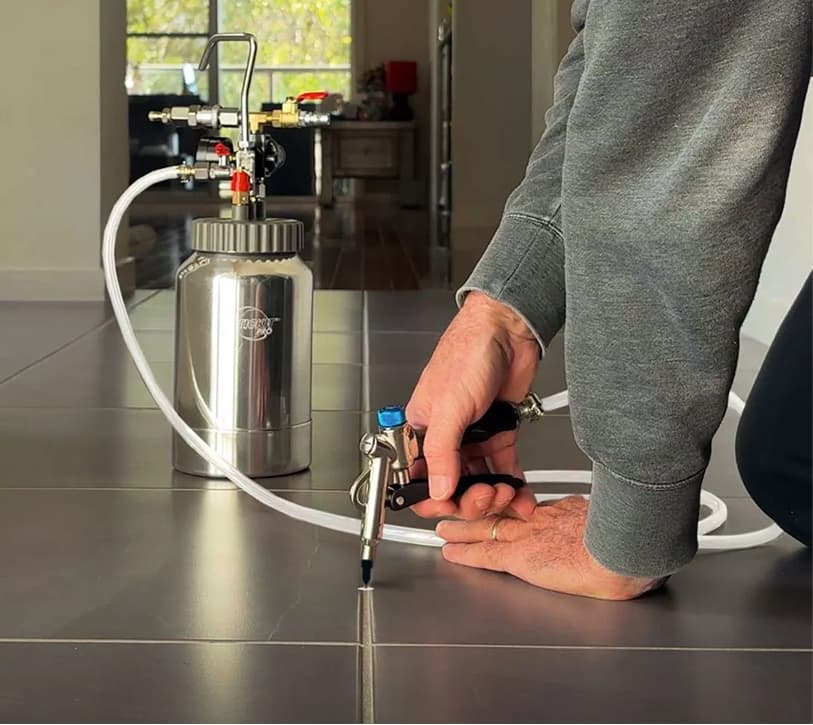
Epoxy injection tile repair is a targeted, non-invasive repair technique used to re-bond tiles that have separated from the substrate beneath. Instead of removing and replacing the tile, a high-performance epoxy is injected through fine access points drilled into the grout lines, filling the gap and restoring adhesion.
The epoxy used in this process is a two-part system. When mixed, it creates an adhesive that flows easily into narrow spaces beneath tiles, even where the gap is only a few millimetres. Once cured, it forms a strong, flexible bond that holds the tile firmly in place.
What sets this method apart from traditional adhesive repairs is the material itself. Conventional adhesives often fail to fully penetrate or stabilise voids beneath tiles. A professional-grade injection epoxy is formulated to bond effectively within confined spaces and to cure into a durable yet flexible bond, allowing it to accommodate minor substrate movement without becoming brittle.
At Drummy Repair, we use a proprietary epoxy injection system that’s been field-tested across hundreds of residential and commercial projects. The specific product and approach are selected based on the tile type, substrate condition, and environment, because getting the formulation right is just as important as the injection itself.
The Key Benefits of Epoxy Injection Tile Repair
Epoxy injection is a proven method for addressing loose and hollow tiles. By addressing the problem at its source, it provides a targeted approach without the need for tile removal or full replacement
- Cost-efficient solution: With epoxy injection no demolition, new tile purchasing, and re-tiling labour is required. In comparison, epoxy injection typically costs a fraction of full tile replacement. For a detailed breakdown, see our guide ontile repair costs in Australia.
- Minimal disruption and efficient turnaround: Most residential epoxy injection jobs can be completed within hours. The process does not require demolition, heavy equipment, or extended downtime, and areas are often ready for light use the same day.
- Preserves your existing tiles: This solution retains original tiles and grout, which is particularly valuable in situations where matching discontinued or aged tiles is not feasible. This means the existing appearance of the surface remains unchanged.
- Durable, long-term performance: Its special formulation allows it to penetrate and fill voids effectively, creating full contact across the underside of the tile rather than isolated adhesion points. Once cured, it hardens into a dense, high-strength material that resists cracking and shrinkage. This results in a stable bond that is less prone to failure compared to conventional spot-bonded installations.
- It works across tile types and surfaces. Suitable for most tile types, including ceramic, porcelain, and natural stone tiles across both floor and wall installations. Commonly used in residential and commercial environments, including bathrooms, kitchens, living areas, hallways, and high-traffic spaces.
Epoxy Injection vs. Full Tile Replacement
Choosing between repair and replacement depends on the condition of your tiles, the extent of the damage, and the underlying cause. Here’s a side-by-side comparison:
| Factor | Epoxy Injection Repair | Full Tile Replacement |
| Cost | Lower. No demolition or new tiles needed | Higher. Includes removal, materials, and labour |
| Time | Hours (walkable same day) | Days to weeks |
| Disruption | Minimal. No dust, no mess | Significant. Noise, debris, displacement |
| Tile Matching | Not required. Originals preserved | Can be difficult, especially with older or discontinued tiles |
| Durability | Long-lasting structural bond | Long-lasting (if root causes are resolved) |
| Best For | Hollow/drummy tiles with intact surfaces | Cracked, broken, or structurally damaged tiles |
When Is Epoxy Injection the Right Solution?
Epoxy injection is effective for specific types of tile failure where the underlying issue is loss of adhesion rather than damage to the tile or substrate. Understanding when it’s appropriate (and when it’s not) helps you make the right decision.
Ideal Scenarios for Epoxy Injection
Epoxy injection is appropriate where tiles are hollow or loose but remain structurally intact and visually undamaged. It’s commonly used in bathrooms, kitchens, hallways, and other high-traffic areas where preserving existing finishes and minimising disruption is important. It can be applied to isolated sections as well as larger areas where multiple tiles have debonded.
The method is equally effective whether you’re dealing with a single tile or an entire room of drummy tiles.
Limitations
While effective for most tile repair, epoxy injection is generally not suitable for tiles that are already significantly cracked or broken. In these cases, the tile itself needs replacing.
The underlying structure should also be considered. When the substrate beneath the tiles is severely compromised, unstable, or affected by ongoing issues such as active moisture ingress or failed waterproofing, the cause of the problem must be addressed directly. Epoxy injection is designed to restore adhesion, not to correct structural defects or underlying substrate failures.
💡When in doubt, an on-site assessment is the best way to determine the right repair method for your situation.
What to Expect During a Professional Epoxy Injection Repair
- Assessment and Identification. A technician inspects the tiled area using a tapping test to map out which tiles are hollow, loose, or debonded. This assessment determines the scope of the repair.
- Preparation. The area is cleaned and prepared. Injection points are identified, typically along existing grout lines, to ensure minimal visual impact.
- Drilling. Small-diameter holes are drilled through the grout lines to access the void beneath the tile. The holes are precise and discreet, causing no damage to the tile surface.
- Epoxy Mixing and Injection. The two-part structural epoxy is mixed according to exact specifications and injected through the access points using a calibrated delivery system. This formula flows into the void, spreading to fill gaps between the tile and the substrate.
- Void Filling and Bonding. As the epoxy fills the space beneath the tile, it makes full contact with both the underside of the tile and the substrate surface, re-establishing the adhesion that had failed.
- Curing and Finishing. Once the injection is complete, the access holes are sealed, grout is restored, and the surface is cleaned. Curing times vary depending on the product used, but in most cases, tiles are walkable within hours.
At Drummy Repair, our process is backed by over 20 years of tiling expertise and a QBCC licence (No. 15566319). From the initial inspection through to completion, every step is carried out by experienced technicians using our proprietary injection system.
Final Thoughts
Loose or hollow tiles do not necessarily require full removal and replacement. Epoxy injection tile repair provides a targeted, non-invasive method to restore tile adhesion without compromising durability or appearance.
By targeting the failed bond beneath the surface and re-establishing full adhesion with a structural-grade epoxy, this method solves the problem at its source. It’s effective across tile types, suitable for floors and walls, and delivers results that last.
Early intervention is critical. Addressing hollow tiles early helps prevent progression to cracking, moisture ingress, and broader surface failure. An assessment is essential to evaluate the condition of the substrate and determine the most appropriate repair approach.
Got loose or hollow tiles? Request a free, no-obligation quote from the Drummy Repair team, or call us on 0436 329 569 to book an on-site inspection.
Frequently Asked Questions
Can epoxy injection fix all types of loose tiles?
Epoxy injection is effective on most tile types, including ceramic, porcelain, and natural stone. However, it’s designed for tiles that are hollow or loose but still visually intact. Tiles that are cracked, broken, or chipped will need to be removed and replaced rather than re-bonded.
How long does epoxy take to cure completely?
In most cases, tiles are safe to walk on within a few hours of injection. Full cure strength is usually reached within 24 hours, depending on the product and environmental conditions.
Is epoxy safe for bathroom and kitchen tiles?
Yes. These formulations are specifically designed for wet areas. They cure effectively in damp conditions and resist degradation from ongoing water exposure. However, they are not suitable for areas with constant or pooling water, where prolonged saturation may impact performance.
Can I walk on the tile immediately after repair?
In most cases, you’ll be able to walk on repaired tiles within a 24 hours or as advised by your technician. Your technician will advise on the specific curing time based on the product used and the conditions of the repair.
How much does epoxy injection for tiles cost?
Costs vary based on the number of tiles affected, tile type, accessibility, and extent of the damage. In nearly every scenario, it’s significantly more affordable than full tile replacement.
Will the colour or finish of my tile change after epoxy injection?
No. Because the epoxy is injected beneath the tile and through the grout lines, the visible surface of the tile is not affected. Your tiles will look exactly as they did before the repair.
Can epoxy injection prevent future tile loosening?
A professional-grade epoxy creates a strong, flexible bond that accommodates minor building movement, which is one of the main causes of tile debonding. While no repair can guarantee against future substrate failure, a properly applied injection significantly reduces the risk of recurrence.
How long does a tile repaired with epoxy injection last?
When performed correctly using a high-quality structural epoxy, a tile injection repair provides a strong, long-lasting bond. The elastomeric properties of the bond allow it to flex with natural building movement, which helps maintain adhesion over the long term. Durability also depends on addressing the original cause of the tile failure.

